Rear-Door Lockout: Sorting the Vauxhall Meriva’s Stubborn Latch for Under £30
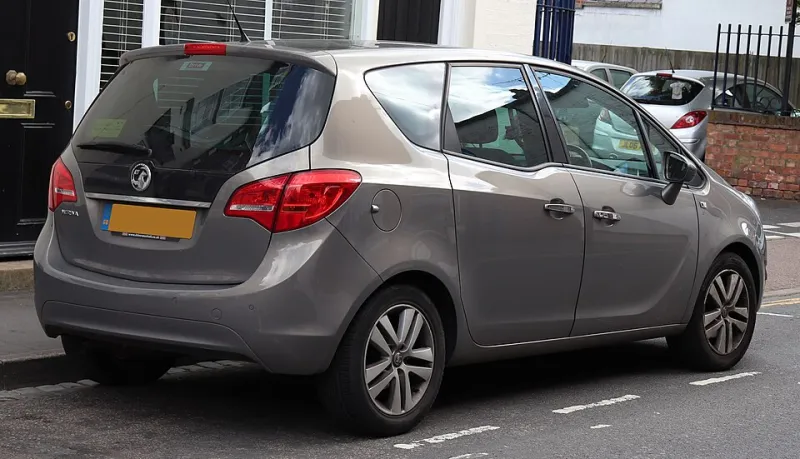
Photo: Vauxford, CC BY-SA 4.0, via Wikimedia Commons
The Vauxhall Meriva has spent well over a decade being Britain’s quietly useful mini-MPV: tall roofline, flexible seats, and a footprint that still fits a supermarket bay. It has also developed a reputation for rear doors that occasionally stage a sit-in. One day the handle feels normal, the next it clicks into thin air and the door will not budge. Before you start picturing angle grinders and a four-figure body shop estimate, take a breath. On a lot of Merivas the culprit is a tired cable, a popped ferrule or a latch that has run out of grease. The parts bill can genuinely land under £30.
First, work out which Meriva you are dealing with
The Meriva badge covers two very different generations. The earlier Meriva A uses conventional rear doors. The later Meriva B is the one with rear-hinged FlexDoors, which swing open at the back edge rather than the front. Both can suffer latch and cable trouble, but the access and handle layout differ. Check the age and shape of your car before ordering anything, and do not assume a breaker’s door from a different generation will donate the right bits.
It also helps to know whether the problem is one door or both, and whether it changes with temperature. A Meriva that refuses to open only on frosty November mornings is telling you something different from one that has been dead since a pothole-heavy school run in July. Note whether the central locking is cycling properly, whether the interior light responds, and whether the outer handle feels loose, stiff or completely disconnected.
The quick checks before you buy a cable
Start with the embarrassingly simple stuff. Is the child lock engaged? On the rear doors, the child lock can leave the inner handle doing nothing while the outer handle works perfectly. That is not a fault, just a small plastic tab doing its job. If the outer handle opens the door and the inner one does not, check the child lock before removing any trim.
Next, listen. Operate the handle while standing close to the door. A faint click from inside the door suggests the handle is still moving a cable and the latch is trying to release. A completely dead, floppy handle points towards a broken cable end or a disconnected linkage. If the central locking makes noise but the door remains locked, the actuator or deadlock side of the latch may be involved rather than the handle cable alone.
Cold weather is a useful clue on older cars. Water sneaks past tired seals, the latch mechanism gets stiff, and the cable outer can freeze or the grease turns to toffee. A hair dryer aimed carefully at the door handle area can sometimes persuade a frozen latch to release, but do not use heat near paint or glass. If warmth fixes it temporarily, plan to clean and lubricate the latch rather than ignoring it.
Inner versus outer: diagnosing the handle circuit
The Meriva’s rear door uses a cable from the exterior handle to the latch, and a separate cable or rod from the interior handle. The exact layout varies by generation, but the principle is the same: each handle pulls a small cable, and that cable trips the latch. If one handle works and the other does not, you have narrowed the fault considerably.
Outer handle dead, inner handle working: suspect the exterior handle cable, the handle pivot itself, or the cable’s plastic end fitting. A common failure is the nipple pulling out of the handle or the outer cable ferrule popping out of its bracket. Sometimes the handle feels loose because the cable has snapped just inside the door.
Inner handle dead, outer handle working: first check the child lock. If that is definitely off, inspect the interior handle cable and the lever on the latch. Broken interior handle cables are common on older cars, and the handle can feel normal while pulling nothing.
Both handles dead: the latch itself is the prime suspect, along with the central locking actuator or a seized release lever. If the door will not open at all, you may need to remove the door card from inside and trip the latch manually. On a Meriva B FlexDoor, that can be fiddly because of the rear-hinged layout, so take your time and avoid bending trim clips.
The usual culprits and what they cost
A pattern rear-door cable assembly for a Meriva often sits in the £10–£30 bracket online, with genuine Vauxhall parts costing more but still far less than a main-dealer diagnostic and repair bill. The cable is not a glamorous part: it is a Bowden cable with a plastic ferrule and a small metal nipple. They dry out, fray and snap. The plastic ends also become brittle with age, which is why a door that worked last winter can fail without warning.
The latch assembly is a bigger buy. A used latch from a breaker might cost £25–£60, while a new pattern or genuine latch can run well past £100 depending on the part number. If the cable is intact and the handle is pulling properly, but the latch will not release, a scrapyard latch with the same part number can be the smarter buy. Match the number stamped on the latch, not just the model year, because Vauxhall changed details across trim levels and production runs.
Before buying, check the part number against your registration or the sticker on the existing latch. UK motor factors, Vauxhall specialists and online catalogues can cross-reference the number. If you are buying used, ask the breaker to send a photo of the part number and the cable mounting points. A cheap latch that does not match is just clutter for the garage shelf.
Fitting the cable without making a meal of it
Disconnect the battery if you are working near the central locking wiring, and give yourself decent light. Remove the door card carefully; Meriva trim clips are old enough to be brittle, so a proper trim tool is better than a screwdriver and swearing. Peel back the vapour barrier without tearing it, and look for the cable route. Operate the handle while watching the cable end to see whether it moves.
If the cable has snapped or the ferrule has popped out, compare the new cable with the old one before fitting. Route it exactly as the original was routed, clip it into the brackets, and check that the inner cable moves freely. Lubricate the latch mechanism with silicone grease or a dedicated white grease, not a squirt of thin WD-40 that will attract dirt and dry out again. Test the inner and outer handles, the child lock and the central locking before you refit the door card. There is nothing worse than a tidy door card hiding a cable that was never clipped in properly.
When to stop and call in help
If the door is jammed shut, the latch is seized solid, or the central locking actuator is behaving erratically, know when to stop. A stuck rear door on a Meriva can turn into a trim-damage exercise if you force it. A good independent Vauxhall specialist will have seen this before and can often free the latch or replace the actuator without drama. The main-dealer route is fine if the car is under warranty or you simply want it done, but for an older Meriva the maths usually favour a £30 cable, a Saturday morning and a bit of patience.
The Meriva is still a sensible, practical machine in 2026, and a rear door that will not open should not be the thing that sends it to the bridge. Diagnose the handle circuit, check the child lock, source the right cable or latch, and keep the repair honest. These cars reward owners who are willing to look behind the door card.