The Weekly Top-Up Club: Hunting a 1.4 Turbo Coolant Leak on Astra J and Mokka
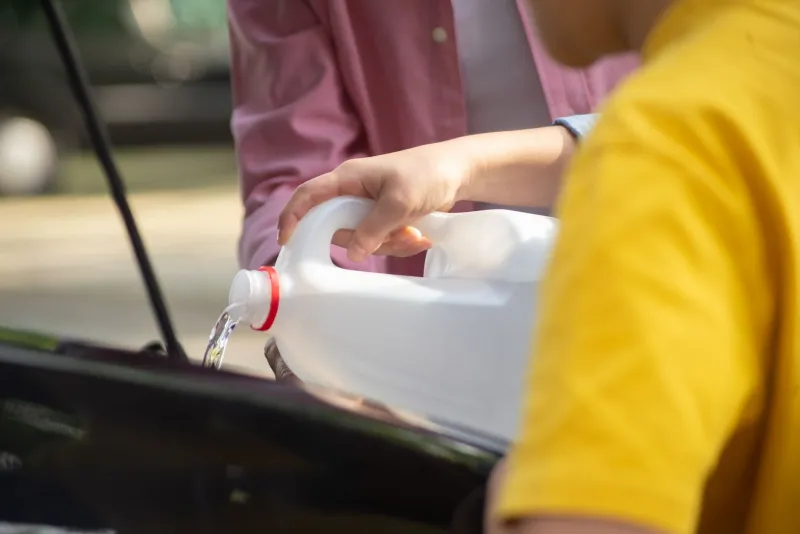
There is a particular kind of ownership ritual that starts around late October: you open the bonnet on a cold morning, squint at the expansion tank, and top up the coolant again. Not a lot. Just enough to make you wonder where it is going. If that sounds familiar and there is a 1.4 turbo under the bonnet of your Astra J or Mokka, you are in a fairly large club.
The engine family behind both cars — the A14NET and its close relatives — is a decent little unit, but it is not immune to coolant losses. The trouble is that the first symptom, a slowly dropping level, gets jumped on as a head gasket far too often. Sometimes that is right. More often, it is a plastic housing, a tired seal, or a pipe that has done ten winters and has decided it has had enough.
This is not a scare story. It is a plan. Work through it in order, and you will either find the leak or build a case for getting rid of the car before it empties your wallet.
First, rule out the boring stuff
Before you start imagining cylinder heads, check the basics. The expansion tank cap is a pressure valve, and when it stops sealing properly you get a slow loss with no puddle. A replacement cap is one of the cheapest parts on the car. Check the sealing face of the tank too; a split or distorted neck can mimic a cap fault.
Check the level when the engine is stone cold, on level ground. Mark the tank with a pencil if you want a proper reference. Also look for staining around the overflow and the seam of the tank itself. A faint pink or white crust is coolant that has dried out, and it is a useful clue.
And do not ignore the obvious. A slightly overfilled system will push a bit out when hot. That is not a leak; that is physics. If you have been topping up to the brim every week, you may be creating the problem you are trying to solve.
The usual suspects on these engines
On Astra J and Mokka 1.4 turbos, the leak points tend to cluster in a few places.
The thermostat housing is a common one. It is a plastic assembly with rubber seals, and it lives through constant heat cycles. Look for crusty residue around the joint and the sensor area. The water pump is another favourite. A failing pump often leaves a trace from its weep hole, sometimes only when the engine is hot and the system is pressurised. From above it can look dry; from below, with a torch, you may see a dried trail down the block.
Then there are the plastic coolant pipes. On these engines, several are moulded and clipped together, and the seals harden with age. The turbo feed and return lines are also worth a look, particularly the banjo fittings and their copper washers. Heat and vibration do them no favours. A leak there can burn off on the hot side and leave very little evidence beyond a smell and a gradual loss.
Do not forget the heater matrix and the radiator. A damp passenger footwell or a sweet smell through the vents points one way; a damp patch at the bottom corner of the radiator points another. Neither is a five-minute fix, but both are better diagnosed early.
The head gasket assumption
Here is where a lot of owners lose money. They see a coolant loss, spot a bit of mayonnaise under the oil cap, and conclude the head gasket has gone. On a car used for short trips in cold weather, that mayo is often just condensation. It is not proof of anything.
A proper combustion gas test is cheap enough and far more useful. So is a cooling system pressure test. If the system holds pressure and there are no combustion gases in the coolant, you have bought yourself time and saved a lot of unnecessary panic.
The real head gasket warnings are more specific: repeated overheating, hoses that go rock hard very quickly, bubbles in the expansion tank with the cap off, a misfire from a cold start, or coolant being pushed out of the overflow. Even then, get it tested rather than guessed.
A home pressure test that actually finds things
You can buy a cooling system pressure test kit for roughly £25 to £60, and it will pay for itself on the first job. The idea is simple: pressurise the system when cold and watch for a drop while you inspect every joint.
Let the car sit overnight if you can. Remove the cap, fit the correct adaptor, and pump to the rating on the cap — usually around 1.4 bar on these cars, but check yours. Do not go beyond it. Then wait. A good system should hold for ten to fifteen minutes with little or no movement on the gauge.
While it is pressurised, get a torch and look at the thermostat housing, the pump area, the turbo lines, the pipe joints at the back of the engine, and the radiator seams. Put a clean piece of cardboard under the car. A slow drip that never reaches the floor will often show up as a damp patch on the cardboard.
If the leak is tiny, UV dye can help. Add it according to the instructions, run the car, then use a UV torch in a dark garage. It is surprisingly effective on those annoying seeps that only appear when everything is hot.
One safety note: never open a hot system. And dispose of used coolant properly — it is poisonous and should go to a local recycling centre, not down the drain.
What genuine bits cost in 2026
Prices move around, so treat these as ballpark figures rather than quotes. A genuine or quality OE water pump for a 1.4 turbo typically lands somewhere around £120 to £200. A thermostat housing is often £80 to £160 depending on whether it comes with sensors and seals. Plastic coolant pipes tend to be £20 to £70, and turbo feed or return pipes around £40 to £100. A new expansion cap is usually £10 to £20.
Labour is the bigger variable. An independent garage may charge £60 to £100 per hour depending on where you are in the UK, and a water pump or thermostat housing job can take a few hours once the system is drained and bled. If you are doing it yourself, budget for fresh coolant as well — a 5-litre concentrate is roughly £15 to £25, and you want the correct mix rather than neat antifreeze.
When to stop chasing it
There is a point where enthusiasm becomes bad maths. If the car has overheated badly, the head is suspect, and the body and electrics are tired, a big coolant repair can be the beginning of the end. The same applies if you find three or four leaking plastic components at once on a high-mileage car that is already worth less than the repair bill.
A useful rule of thumb is simple: if a single leak is the only real fault and the rest of the car is solid, fix it properly. If the diagnosis is internal, the engine has been cooked, or the quote is heading towards half the car's value, get a second opinion and then make a cold decision. These cars are not rare, and there is no shame in walking away from a money pit.
A winter checklist for the weekly top-up club
If you are topping up weekly, stop guessing and pressure-test it. Then check the strength of the antifreeze before the first hard frost — a weak mix is an invitation to a cracked block or a popped core plug. Bleed the system properly after any work; trapped air can cause hot spots and false overheating. Keep a premixed bottle in the boot, not neat antifreeze, and check the level cold once a week rather than every morning.
Most importantly, do not let a small leak become a big one. A £15 cap or a £30 pipe is a lot cheaper than a head gasket, and the 1.4 turbo has enough real jobs to worry about without inventing extra ones.