The £4,000 Hybrid Gamble: Running a Vauxhall Ampera in 2026
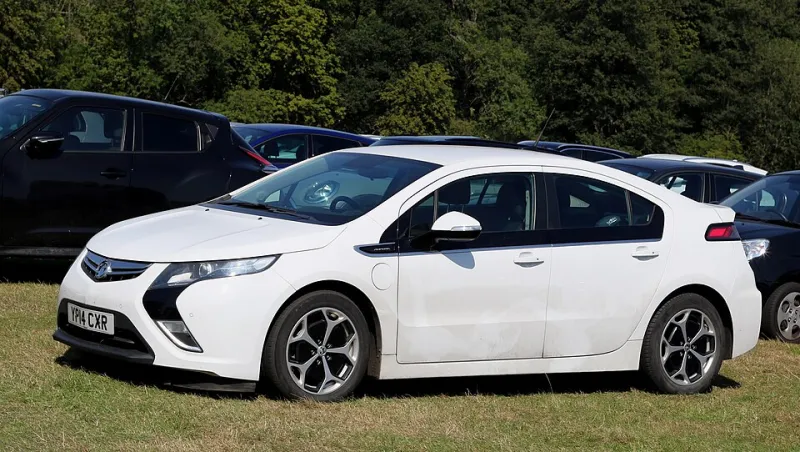
Photo: Charles01, CC BY-SA 4.0, via Wikimedia Commons
Fifteen years is the awkward age
The Vauxhall Ampera is now firmly in that phase of life where it is old enough to be interesting, cheap enough to be tempting and complicated enough to scare off sensible people. In 2026, a tidy UK car can still be found for four figures, which makes GM’s early range-extender look like a shortcut into electrified motoring. It is not that simple, but it is not a disaster either.
The Ampera was never a pure hybrid in the Prius sense. The wheels are driven by an electric motor, with a 1.4-litre petrol engine acting as a generator when the 16 kWh battery runs low. That Voltec arrangement was clever in 2011 and it remains genuinely usable today if the battery, cooling system and high-voltage gear have been looked after. The problem is finding one that has.
What a healthy Ampera feels like
A good Ampera should pull away silently, switch between EV and range-extender modes without drama and show a sensible electric range in mild weather. UK cars are now mostly on 80,000 to 120,000 miles, so battery health matters more than shiny paint. Ask for a diagnostic read before you fall for a cheap one. You want cell voltage balance, no repeated battery management codes and proof that the coolant loops have been serviced.
Do not trust the dashboard estimate alone. A cold morning, a heater set to 22°C and a motorway slip road will all take chunks out of the displayed range. Owners report that a cared-for pack can still cover a useful commute, but tired cells turn the car into a petrol generator with extra weight. A specialist inspection is worth more than a long test drive.
Voltec servicing: where owners get caught
The high-voltage system is not a driveway DIY job. That is not snobbery; it is safety. But the Ampera still needs ordinary maintenance. The petrol engine wants oil and filters even though it does not drive the wheels, the brakes need exercising because regenerative braking can leave discs lazy, and the 12V battery is critical. A weak auxiliary battery can throw a surprising number of false faults.
Coolant pumps, charge-port issues and ageing sensors are the sort of things that crop up. Some parts are shared with the Opel Ampera and Chevrolet Volt, which helps, but the UK dealer network is not going to greet a 2011 range-extender with a cheerful parts counter display. You need a specialist who understands Voltec diagnostics, or at least a garage willing to follow the procedures rather than guess.
Parts: better than feared, worse than hoped
Here is the honest split. Mechanical consumables, brakes, suspension bits and some electrical components can be sourced through GM part numbers and specialist breakers. Body panels, trim and high-voltage components are harder. A cracked lamp or a dead charging module can turn a cheap car into a frustrating wait.
That is why you buy the best Ampera you can find, not the cheapest. A £3,500 car with a suspect battery and no service history is not a bargain; it is a project with a charging cable. A £5,000 car with a documented health check and a known specialist behind it may be the cheaper long-term purchase.
The 2026 verdict
The Ampera is a viable cheap hybrid only for a certain owner: someone with a short commute, a second car for long trips, and access to a GM specialist who does not run away when the words high voltage appear. It is not a replacement for a Corolla, and it is not a pure EV. It is a fascinating piece of GM engineering that still makes sense at the right price.
If you want one, budget for a proper inspection, keep a contingency fund and join the owners’ network. Thompson GM’s view is simple: the Ampera is not a parts-buying trap by default, but it becomes one the moment you buy on emotion and ignore the battery readout.