Rear-Drive, Real Bills: Running a Vauxhall Omega B in 2026 Without Rose-Tinted Glasses
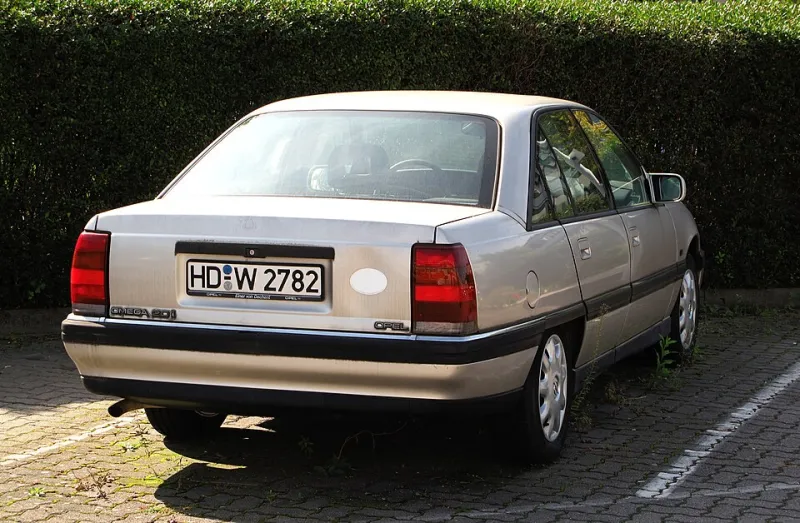
Photo: Rutger van der Maar, CC BY 2.0, via Wikimedia Commons
Ask most people about a rear-drive Vauxhall and you will get a blank look, followed by a mention of the VXR8. Fair enough, but before the Holden-based V8 arrived there was the Omega B: the last volume Vauxhall executive car to send power to the back wheels. In 2026 it is firmly in modern-classic territory. That means parts are still findable, knowledge is good, and the gap between a bargain and a money pit is almost always rust.
Here at Thompson GM we like the Omega for what it is: a simple, roomy, honest GM saloon or estate that drives like a proper old rear-drive car. We do not like the romantic version where a £1,200 eBay find turns into a reliable daily after a wash and a set of plugs. It can be a sensible buy, but only if you audit it like a technician rather than a dreamer.
What you are actually buying
The Omega B ran from the mid-1990s into the early 2000s, so the youngest examples are now well over 20 years old. The engine range splits neatly. Four-cylinder cars use the 2.0 or 2.2; six-cylinder cars use the 2.5, 2.6 or 3.0 V6, with the later 2.6 and 3.2 representing the facelift end of the line. Saloons are most common, estates — Caravans in Opel speak — are the useful ones, and automatics suit the car's character.
Prices in 2026 are all over the place. A scruffy 2.0 saloon with a short MOT might be £800 to £1,500. A tidy, tested 2.2 or V6 with history is more like £2,500 to £5,000, and nice Elites or estates ask more. Do not pay a premium for low mileage alone. A low-mileage car that has sat outside for a decade can be worse than a high-mileage one that has been used and maintained.
The rust audit that decides everything
The Omega B is not a hopeless rust bucket by default, but it has known weak spots and they are structural. Start at the front strut towers. Look under the bonnet, around the top mounts and down the inner wings. If the metal is lace, walk away. Sills and jacking points are the next classic failure, especially on cars that have been jacked badly or run through British winters. Rear arches, boot floor, spare wheel well, fuel filler neck area and the rear suspension mounting points all deserve a probe and a torch.
Brake and fuel lines rot quietly along the floor and over the rear axle. They are cheap parts but awkward jobs, and an MOT tester will not miss them. Check the front and rear subframe mounts, the battery tray, and the area around the windscreen scuttle. A little surface rust is normal; flaking metal around a suspension pickup is not.
If you cannot weld, price welding before you buy. A friendly independent bodyshop might charge £300 to £600 for a straightforward sill patch, but once you are into strut towers or multiple floor repairs the bill can double quickly. That is the point where a cheap Omega stops being cheap.
Suspension and steering: where the bills hide
The Omega rides well because it has proper suspension, and that is also why it can empty your wallet. Front wishbone bushes and ball joints wear, rear trailing arm bushes go soft, and tired dampers make the car feel vague. None of it is exotic, but the labour adds up. Pattern arms are cheap; good-brand arms are not much more, and they last. Do not fit the cheapest eBay suspension kit and expect a £5,000 feel.
Estates and higher-spec cars may have self-levelling rear suspension. When it works it is excellent; when it fails it is expensive. Check the rear ride height with the car loaded and look for leaks around the dampers and hydraulic lines. Some owners convert to conventional springs and dampers, which is fine if you accept the compromise. Also check the steering idler arm and track rod ends — vague steering on an Omega is often worn bushes rather than a worn steering box.
Engine choices and the jobs that matter
The 2.0 is the simple one. It is not fast, but it is smooth enough and parts are cheap. Cambelt history matters, as do cam cover gaskets, oil leaks and cooling system condition. The 2.2 has more torque and a chain rather than a belt, but it still needs regular oil and a look at the chain guides if the mileage is high. Neither four is a powerhouse, but both suit the car.
The V6 is the one enthusiasts want. The early 2.5 and 3.0 need a cambelt and tensioner at the right intervals, and the later 2.6 and 3.2 need attention to chain guides and variable intake hardware as they age. V6s are smooth and sound good, but they are thirstier and more complex. A neglected V6 can cost more in one repair than a whole four-cylinder car is worth. Buy on condition and evidence, not cylinder count.
Common Omega faults include oil cooler leaks, cam cover gaskets, idle control valves, DIS packs, coolant hoses and tired radiators. None is a deal-breaker if priced in. A compression test and a cold start tell you more than a warm test drive.
Parts cross-reference without main-dealer tax
The Omega B was sold as an Opel across Europe and as the Cadillac Catera in the US from the late 1990s to 2001. That matters for engine and gearbox bits, some sensors and service items, because Catera part numbers can open up US suppliers. It does not mean body panels or trim are interchangeable — they are not. Use the part number on the casting or the GM parts catalogue, not the model name, and cross-reference carefully.
Vauxhall and Opel part numbers often share the same core digits. A good motor factor can match a number to a Febi, SKF or Lemförder equivalent. For trim and body parts, the owners' clubs and specialist breakers are your best bet. Genuine GM parts can still make sense for sensors and critical engine bits; pattern parts are fine for consumables. Just avoid no-name suspension and ignition components.
The 2026 verdict
An Omega B is still a lot of car for the money, but it is not a cheap car to run badly. Buy a solid shell with a good engine, budget £1,000 for the first year of sorting, and do the jobs properly. If you can weld, spanner and read a part number, it is a rewarding rear-drive Vauxhall that stands out at a show. If you need a reliable daily and pay for every job, a rough one will hurt.
The rule is simple: rust decides the car, not the engine. A solid 2.0 with a tired interior is a better buy than a shiny V6 with soft sills. Keep it honest, keep it dry, and an Omega B can still earn its place on a 2026 driveway.