The Astra H Oil Trail: Curing the 1.8's Leaks Before They Write the Car Off
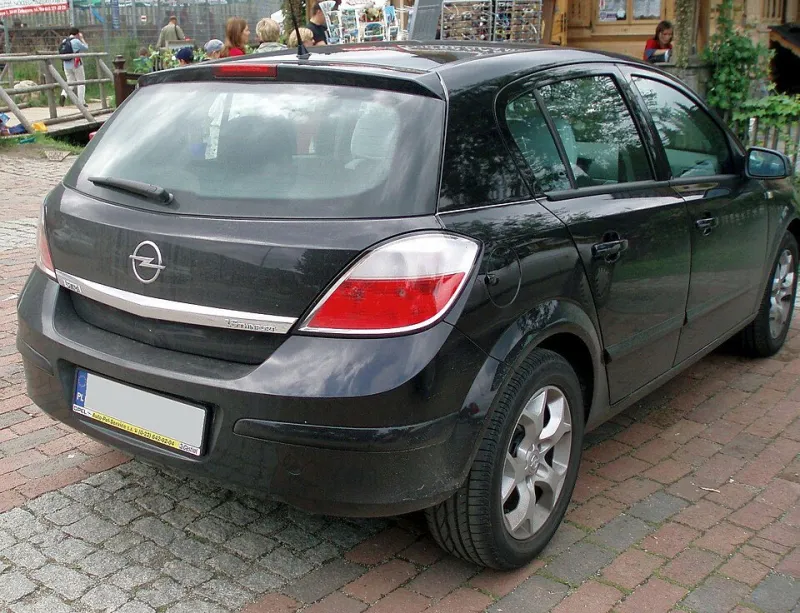
Photo: Roman Tworkowski, CC BY 2.5, via Wikimedia Commons
You can buy a half-decent Astra H 1.8 for under two grand in 2026, which is exactly why a £700 repair quote feels like a bad joke. But that figure is nearly always a worst-case chain of jobs, and it's still cheaper than scrapping a structurally sound car and inheriting somebody else's neglected Vauxhall with a fresh MOT and a fresh set of leaks.
This is the walkthrough I'd give a mate who's just phoned to say his Astra H — or Zafira B, same engine, same faults — has started leaving little dark stamps on the block paving.
Start with why it's leaking, not where
The Family II 1.8 (Z18XE in earlier cars, Z18XER in most Astra H and Zafira B models) is a genuinely tough unit. It doesn't fail because it's fragile; it fails because it's fifteen-odd years old and every rubber seal on it has been cooked solid by a decade and a half of heat cycles.
The bit most people miss is the crankcase breather. On the Z18XER the cam cover carries an integrated breather diaphragm, and when that splits you get positive crankcase pressure pushing oil out of every weak point it can find — the cam cover gasket, the front crank seal, even the dipstick tube. Fit a new gasket without sorting the breather and you'll be back under the bonnet by autumn. If your car whistles or the dipstick pops, that's your clue.
Cam cover gasket: the cheap job everyone gets wrong
Symptoms are a hot oil smell after a run, oil pooling around the spark plugs, and a trail down the back of the block that ends up on the gearbox bellhousing. That last one terrifies people into believing they've got a rear main seal failure, because it's the same patch of floor.
Do the diagnosis properly. Clean the whole area with brake cleaner, drive a couple of hundred miles, then get underneath with a torch and look upward. A cam cover leak shows oil at the top of the block. A crank seal leak shows it at the bottom.
The gasket itself is £15–£30 for a decent Elring or Victor Reinz item, and an hour of labour covers it. Check the plastic cover for warping or hairline cracks while it's off — a warped cover will leak again no matter how good the gasket is. On higher-mileage cars it's often cheaper to fit a known-good used cover from a breaker than to chase a sealing problem round in circles.
Oil cooler and filter housing seals
On the Z18XER the cooler is bolted to the filter housing on the front of the block, held by a gasket and a pair of O-rings that go hard and flat with age. You get a weep down the front face of the engine, usually landing near the auxiliary belt — and oil on a belt is how a £40 job turns into a recovery truck.
Seal kits run £15–£40. Labour is two to three hours because access is awkward and the coolant circuit has to be opened. Have a look at the coolant hoses and the thermostat housing while you're in there; they're all the same age and they all fail the same way shortly afterwards.
Crank seals: one is cheap, one really isn't
Front crank seal is a £10–£20 part, but the timing belt has to come off to get at it. So do the belt, tensioner and water pump in the same visit — a Gates or SKF kit is £60–£100 and it's the only sensible way to spend that labour twice. Budget £250–£350 all in at a decent independent.
Rear main is the expensive one. Gearbox out, £400–£600 on its own. If the clutch is original and the car is past 100,000 miles, you were going to be paying for that anyway, so the extra cost of the seal while the box is on the floor is small comfort but real.
Where the £700 actually comes from
Add it up. Cam cover gasket and breather check, oil cooler seals, front crank seal with a full timing kit, and a couple of hours of diagnostic time. At an independent charging £65–£85 an hour, that's £600–£800, of which maybe £250 is parts. Say £700 and you're in the right postcode.
But most cars don't need all of it. A car with one leak and a healthy breather is a sub-£100 fix. The £700 figure only exists for the unlucky combination of a neglected engine and a garage that quotes every possible job at once — which is a fair thing for them to do, but ask them to rank the jobs by priority and do the top one or two first.
What the MOT tester will actually say
Oil leaks aren't a standalone failure item in the way owners assume. A car isn't failed simply for marking its spot on the test bay floor. What does cause trouble is severe contamination — oil soaking brake discs, dripping onto the exhaust and smoking, or leaving the underside in a state where the tester can't properly inspect it. In practice you'll usually get an advisory, and a growing trail of advisories does real damage to what little resale value these cars have left.
The rust check that decides everything
Oil does not kill Astra Hs. Rust does. Before you sign off £700 of engine work, get the car in the air and have a proper look at the rear arches, the sills, the jacking points and the rear subframe mounts. Brake pipes on the rear beam are another classic.
If the shell is soft, the leak is a gift — it's the excuse you needed to walk away cleanly. If the shell is solid and the leak is coming from the top end, get it fixed and keep the car another five years.
The 1.8 will happily do 200,000 miles as long as it has oil in it and the breather isn't blocked. Spend the money once, on branded gaskets from a motor factor rather than an £8 eBay set, and you'll have a car that costs you tyres and consumables for years.